Rekey, replace, or upgrade
Most people ask to have locks replaced when what they need is a rekey. The two are different jobs with different costs and they solve different problems.
Rekeying keeps the hardware and changes which key turns it. The pins inside the cylinder are re-stacked to a new key. It fits a change of tenancy, a lost key, a contractor or former partner who may still hold a copy, or the wish to put several doors on one key.
Replacement changes the hardware itself. It fits a lock that is physically worn, damaged in a break-in, of too low a grade for an exterior door, or simply too old for parts.
In a Brockton multi-family the answer is often both: rekey the unit doors, replace a common entry lock that has taken twenty years of daily use.

Multi-family and three-deckers
Brockton's housing stock makes this the everyday work. A three-family has a common entry, three unit doors, usually a rear stair and a bank of mailbox locks - and every change of occupancy touches several of them at once. The question worth answering before any work starts is who should be able to open what, because that decides whether the building needs keying alike, a small hierarchy, or simply three unrelated rekeys.
Smart locks and keypads
Keypad and smart deadbolts retrofit onto most standard doors. Two things are worth knowing before installing one: batteries fail and a dead battery is a lockout, so check whether the model has a physical key override; and codes need clearing when a tenant or guest leaves, which is the digital equivalent of a rekey and just as easy to forget.
After a break-in
Damaged hardware gets replaced rather than rekeyed, and the frame matters as much as the lock - a forced door often means a split jamb or a strike plate pulled through the wood, and a new deadbolt in a broken frame is not secure. Longer screws into the stud behind the jamb do more for a residential door than a more expensive lock.
Commercial door hardware
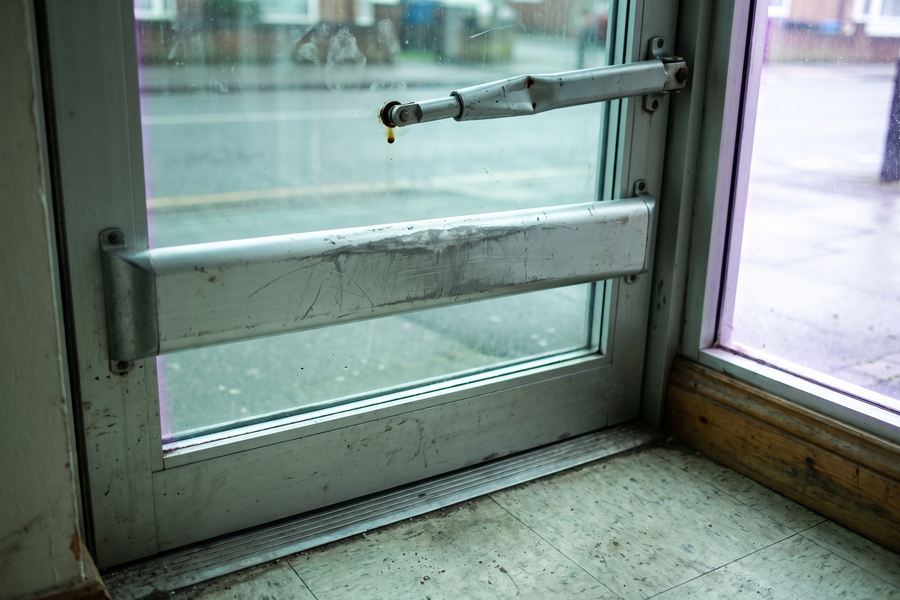
Commercial work is a different trade from residential. Aluminium storefront doors take different hardware from a wooden front door. Panic devices and closers are governed by egress requirements rather than preference. And a building with several tenants wants a keying structure, not a drawer of unrelated keys.
Master key systems
A hierarchy designed on paper before any cylinder is pinned: a tenant key that opens one door, a sub-master for a floor or a wing, and a master that opens everything in the group. The structure decides which keys can exist, so it is worth getting right at the start - retrofitting a hierarchy onto a building of unrelated locks means re-pinning all of them.
Turnover and access records
The trigger for commercial rekeying is turnover, not the calendar. When a keyholder leaves, a key goes missing, or a contractor with access finishes a job, the keys that person held should stop working. Keeping a written record of who holds which key is the unglamorous half of the job and the half that makes the other half possible.
Where the commercial work is
In Brockton it concentrates around Downtown and the Westgate area, and the city carries an unusually institutional building stock for its size - Signature Healthcare Brockton Hospital, Boston Medical Center-South, a Veterans Administration hospital, Massasoit Community College, Fisher College, Brockton High School and Cardinal Spellman High School. Buildings of that shape are multi-door, multi-key, multi-shift problems rather than single-lock ones.
Safes, cabinets and secondary hardware
Safe opening and combination changes, plus file, desk, cabinet, drop box and mailbox locks. Routine work, usually one visit, and frequently the thing a business discovers it needs when the only person who knew the combination has left.
Frequently asked
Should I rekey or replace the locks after moving in?
Rekeying is usually the right call. It changes which key turns the lock while keeping the hardware, which addresses the actual risk - that a previous occupant, a contractor or a former partner still holds a working copy.
Replacement makes sense when the lock is physically worn, was damaged in a break-in, is too low a grade for an exterior door, or is too old for parts.
Can all my doors use one key?
Usually yes, provided the locks are compatible. Keying several cylinders alike is routine work and it is the most common request after a move, particularly where a front door, back door and basement entry all came with different keys.
In a multi-family the same technique builds a hierarchy: one key for a unit, a different key for the common entry, and one key that opens both.
What is a master key system?
A keying hierarchy. Each tenant or department gets a key that opens only their own door, while a master key opens every door in the group - and sub-masters can cover a floor or a wing in between.
It is designed once, on paper, before any cylinder is pinned, because the structure determines which keys can exist. Retrofitting a hierarchy onto a building of unrelated locks means re-pinning all of them.
How often should a business rekey?
The trigger is turnover rather than the calendar. Any time a keyholder leaves, a key goes missing, or a contractor with access finishes a job, the keys that person held should stop working.
Businesses that wait for a fixed annual schedule tend to spend months with keys in circulation they cannot account for.